
Catenaccio and the Italian Defensive Tradition
Catenaccio is often caricatured as pure negativity. Its history is more interesting: a precise set of ideas about marking, cover and counter-attack.
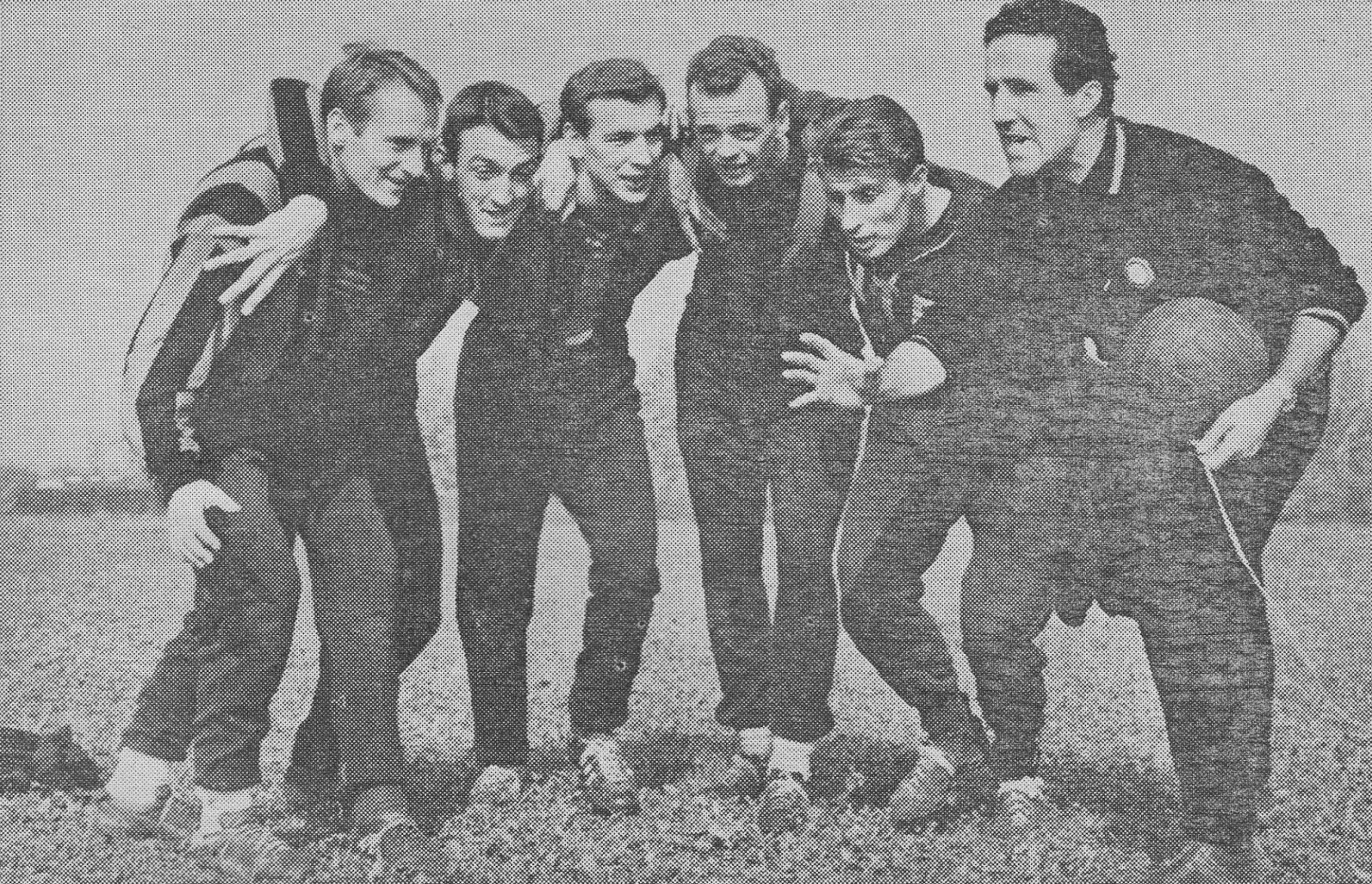
Catenaccio, the Italian word for a door bolt, has become shorthand for defensive football. It is often used dismissively, as though the system consisted simply of putting as many players as possible behind the ball. The history is more nuanced. Catenaccio was a structured approach to defending, built around man-marking and a spare defender, that also depended on fast counter-attacks. It produced some of the most successful club sides of its era.
Origins: the verrou
The roots of the system are usually traced to Karl Rappan, an Austrian coach who worked in Switzerland in the 1930s. His system, known as the verrou, which also means bolt, pulled an extra player back into defence to provide cover behind the markers. The idea was to give teams a way to resist stronger opposition by ensuring there was always a spare man at the back.
The principle travelled. In Italy a number of coaches developed their own versions, adapting the spare-defender idea to local conditions and to the players available to them.
Rocco and Herrera
Two coaches are particularly associated with the high point of Italian defensive football in the 1960s.
Nereo Rocco, after success with smaller clubs, led AC Milan to European Cup victories in 1963 and 1969. His teams combined a strong defensive structure with real quality in attack.
Helenio Herrera's Inter, known as Grande Inter, won the European Cup in 1964 and 1965. Herrera's side is often cited as the archetype of catenaccio, yet it also featured an attacking full-back, Giacinto Facchetti, whose forward runs were an important part of the team's threat.
In both cases the system involved:
- Man-markers assigned to specific opponents.
- A sweeper, or libero, playing behind the markers to cover.
- A compact, deep defensive block.
- Quick counter-attacks into the space left by committed opponents.
Catenaccio was not the absence of an idea. It was a precise idea about defending, and it worked well enough to win Europe's biggest club trophy several times over.
The sweeper's evolution
The spare defender at the heart of catenaccio later developed in unexpected directions. In Germany, Franz Beckenbauer showed that a sweeper freed from marking duties could become a playmaker. Italian football also continued to produce outstanding sweepers who combined covering with distribution.
The man-marking tradition remained strong in Italy through the 1970s and much of the 1980s. Italian defenders earned a reputation for close, disciplined marking, and the national team won the 1982 World Cup with a defensive structure built on these principles.
Sacchi's rupture
The most significant break with this tradition came from within Italy. When Arrigo Sacchi took over at Milan in 1987, he replaced man-marking and the sweeper with a flat, zonal back four, a high line and collective pressing. The approach is described in Arrigo Sacchi's Milan and the zonal pressing revolution.
Sacchi's success challenged the assumption that Italian football's strength lay in man-marking. Over the following years zonal defending spread through Serie A and across Europe, and the classical sweeper largely disappeared from the elite game.
It is worth noting the irony. The same club that had won European Cups with Rocco's defensive structures won them again a generation later with a system that rejected its central assumptions. Milan's history contains both sides of the Italian argument about how best to defend.
What catenaccio left behind
It would be a mistake to see catenaccio simply as a stage football passed through. Several of its ideas persist:
- The value of a spare defender against the opponent's attackers, visible in many back-three systems.
- The importance of defensive compactness in front of the penalty area.
- The effectiveness of the counter-attack against opponents who commit numbers forward.
The history of three-man defences, which draws partly on the sweeper tradition, is traced in the evolution of the back three.
Catenaccio's reputation for negativity has always been partly a matter of perspective. For the teams that used it, it was a way of making the most of their resources against opponents who were often stronger on paper. Understanding it on those terms makes its place in football history clearer.