
Tomas Rosicky and the art of certainty: how instinct built a cult hero
Tomas Rosicky never had the stats to match his reputation, but his reading of space and timing made him Arsenal's biggest-game performer, as Planet Football's look back at his career makes clear.
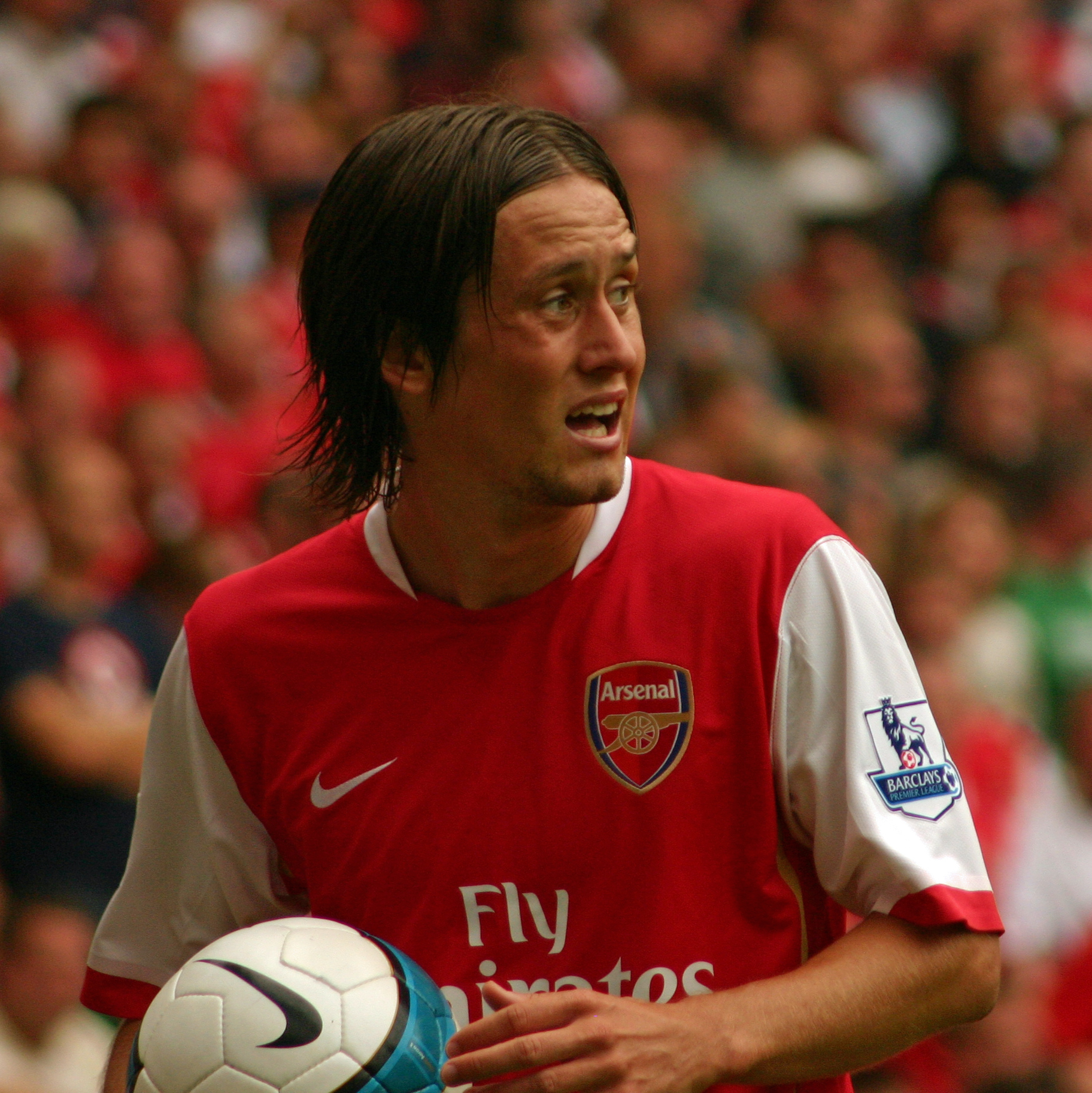
Tomas Rosicky scored one of the most audacious goals of his Arsenal career without ever appearing to doubt himself, and that self-belief, as much as technique, is the thread running through his best moments, according to Planet Football.
Less than two minutes into the 2014 North London Derby at White Hart Lane, a loose ball dropped on the corner of the Tottenham box. Planet Football notes that conventional wisdom said Rosicky should have taken a touch to set himself. Instead he hit it first time, and it went in.
Why the shot worked before it was taken
The analytical point here is about shot selection under pressure. Most midfielders, with the ball bouncing awkwardly at the edge of the area, would control it first and buy themselves a cleaner strike. Rosicky's decision to shoot first time removed that extra touch — and with it, the extra half-second a defender or goalkeeper needs to adjust.
Planet Football describes his approach to the ball as almost pre-emptive: his strides lengthen in a way that looks like an invitation for the ball to meet his boot, rather than the usual approach of adjusting stride length to the ball's bounce. That timing of the run into the strike is what let him generate power associated with players hitting a shot at full speed, despite appearing almost relaxed in his approach.
This was not an isolated piece of instinct. Rosicky's 2012 goal in a 5-2 win over Tottenham, as recounted by Planet Football, relied on the same underlying skill: finding a gap in the defensive line that existed only for a split second. Rather than take the simpler option of exchanging a one-two with Bacary Sagna for a tap-in, he threaded a run between Ledley King and Brad Friedel timed precisely to the moment the gap opened.
Reading space rather than reacting to it
What separates these goals from simple poacher's instinct is the element of disguise in the movement itself. Planet Football's description emphasises that there was no visible break in Rosicky's stride as he shifted from jogging into his run — the transition from a casual pace to full effort was almost imperceptible to defenders tracking him. Even his follow-through, a slight jump after poking the ball home, was understated enough that it barely registered as deliberate.
That capacity to disguise intent inside ordinary movement is a specific attacking skill, distinct from pace or finishing alone. It explains why Rosicky could look unhurried even in the biggest fixtures, setting a tempo that forced opponents to play to his rhythm rather than the other way round — a trait Planet Football links to his nickname, Little Mozart, used by those around the Czech midfielder.
The pattern extended beyond club football. Rosicky's goal against the United States in the opening game of the 2006 World Cup, as Planet Football recalls, is cited as one of the tournament's finest, and it drew on the same reading of timing rather than any obvious curve on the shot. The swerve on the ball was minimal; the key was that it began moving away from Kasey Keller at the exact moment the goalkeeper had already committed, leaving him unable to adjust.
A career defined by moments rather than numbers
Planet Football frames these goals against a wider context: in the calendar year before the 2014 derby winner, Rosicky had scored only five goals. A lesser competitor might have approached a fixture of that magnitude with caution given that scoring record and a history of injury problems. Instead, the pattern held — he produced his best in Arsenal's largest occasions, repeating the trick in the comeback win over Hull City in the 2014 FA Cup final, as the piece notes.
The 2012 derby goal also mattered beyond the scoreline on the day. Arsenal trailed by two goals before winning 5-2, and Planet Football points out that the victory helped set up a later finish in which Arsenal denied Tottenham third place on the final day of that season — a placing that, following Chelsea's Champions League win that year, also cost Spurs a route into Europe's top competition.
Planet Football's broader argument is that Rosicky's England career carries a note of regret: when Arsenal signed him, the hope was for a player who would influence games consistently rather than intermittently, a hope reinforced by a goal he scored for the club before even playing at the Emirates Stadium. Instead his legacy rests on a series of outsized interventions in the fixtures that mattered most, each one built on the same foundation of precise timing and unshakeable conviction.